An AI Agent Just Learned to Turn a Jammed Microscope Knob. MIT Spent Today Asking What Happens If One Gets Hacked.
Are the most commercially important AI agents about to leave browsers and IDEs and enter laboratories, factories, robots, and supply chains — and what new verification, cybersecurity, and systems skills does that create?

Short Answer
Two things are true on the same day, at two different universities, and neither one has caught up with the other yet. Today and tomorrow, MIT's Center for Transportation and Logistics is holding an invitation-only roundtable asking senior supply-chain and cybersecurity leaders what happens when an AI agent with real operational privileges gets compromised — prompt injection, model modification, the specific risk of giving a piece of software the authority to move a purchase order or a shipment. Meanwhile, UT Austin just won a Department of Energy award to build a robot with enough force-sensitivity to spread a liquid solution on a glass plate and also strong enough to turn a jammed microscope knob — real embodied dexterity, not a demo video. Both are genuinely new. Neither has a good answer yet for the question the other one is implicitly asking: MIT is asking "how do we verify an agent before we trust it," and UT Austin is building the kind of agent that question will need to be asked about. The frontier really is moving from browsers and IDEs into labs, and the verification tooling to make that safe is visibly behind the capability curve — not because anyone's being careless, but because both problems are hard and nobody's solved either one yet.
Why "Agentic AI" Suddenly Means Something with Hands
For most of 2025 and early 2026, "AI agent" meant a piece of software that could browse the web, write code, or call an API — Claude Code, GitHub's Agent HQ, the kind of tool a software engineer runs inside a repo. That's still true, but the frontier research happening in September 2026 is visibly about something else: agents that operate machinery, run lab experiments, and move through physical space with actual force and actual consequences if something goes wrong. MIT's own framing for today's roundtable names this shift directly — the event exists to examine "how major cyber incidents and emerging threats associated with AI agents are affecting physical supply chains," introducing a brand-new Supply Chain Cybersecurity Lab specifically because the center's leadership decided the browser-and-code threat model didn't cover what's coming. On the builder side, UT Austin's Department of Energy Genesis Mission award — one of five UT Austin projects funded out of more than 5,000 national applicants — exists because AI-driven scientific discovery has a bottleneck nobody's solved: an AI system can generate a hypothesis fast, but nothing can execute the physical lab work fast enough to test it, and most existing robots don't have the dexterity or the judgment to safely handle real lab equipment without a human standing over them.
How This Connects
open_with Drag nodes to rearrange, tap one for the evidence behind it — pinch or scroll to zoom.
The Tension Nobody's Resolved: Capability Is Outrunning Verification
Here's the part that should get more attention than it does: the same week MIT convened senior risk officers specifically to debate "the trade-offs among AI agent capabilities, privileges, autonomy, and cybersecurity risk," UT Austin's own robotics lab published a paper reporting a 77% improvement in manipulation performance under perturbation — meaning the robot got meaningfully better at handling unexpected physical conditions, which is exactly the kind of capability jump that makes an agent more useful and, by MIT's own framing, more dangerous if it's compromised. Neither team is wrong to be doing what they're doing. But nobody at either institution is currently sitting at the intersection: MIT's cybersecurity work is about software agents in enterprise systems, not agents with actual physical force; UT Austin's robotics work is about capability and dexterity, not about what happens if someone injects a malicious instruction into a robot that can already turn a jammed microscope knob with the right amount of force to not break it.

The DOE Genesis Mission award itself is a version of the same tension in miniature. SAFE-BOLT's own name bakes in the word "safety," and its public description frames the challenge honestly: robots in real lab environments face "severe sensory obstacles" like identifying transparent glassware or navigating reflective metal surfaces — genuinely hard perception problems that have nothing to do with cybersecurity at all. That's the right problem to solve first. It's also true that solving it produces exactly the kind of capable, physically-competent agent that MIT's roundtable exists to worry about, and there's no public evidence yet that the two conversations are talking to each other.
The Numbers So Far
Where This Is Happening
Ground Truth: A Robot That Has to Know How Hard Is Too Hard
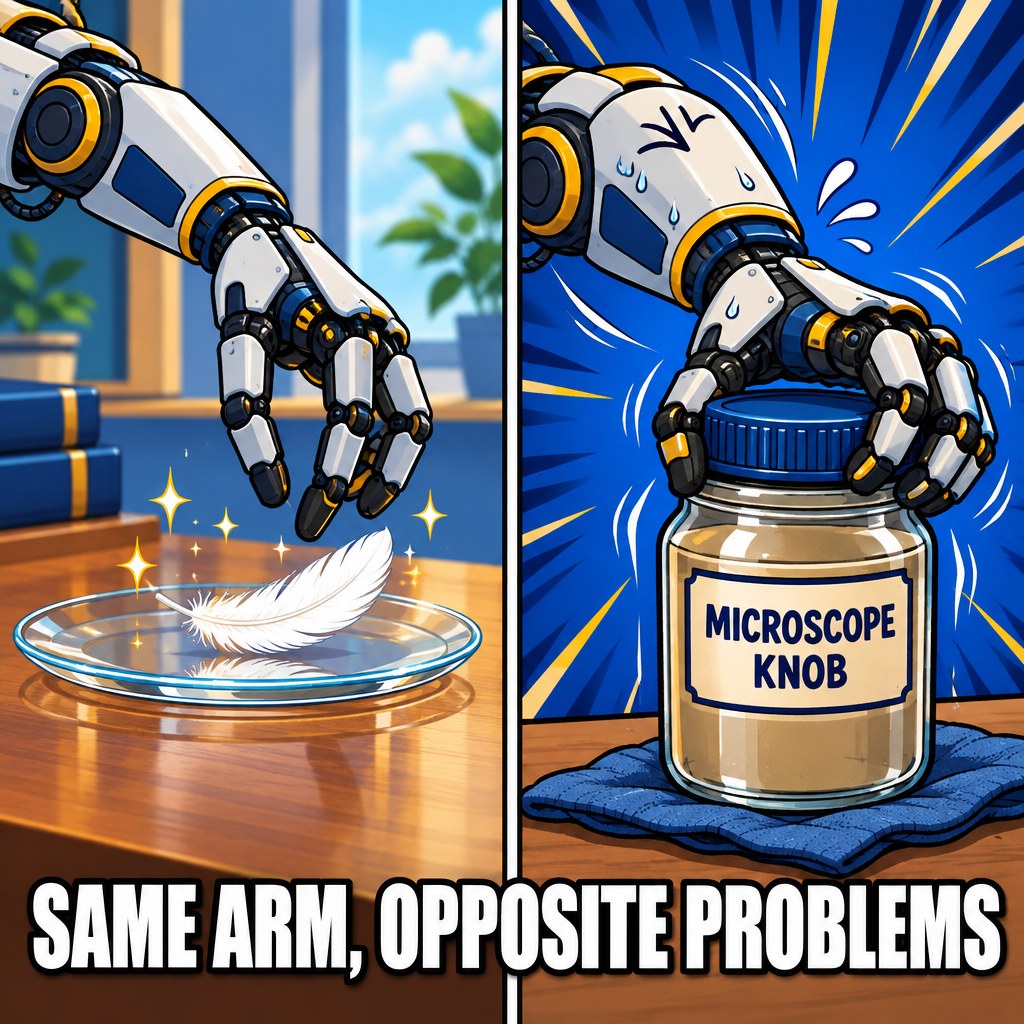
The most concrete, human-legible detail in this whole question is a single design requirement from SAFE-BOLT's own public materials: the robot has to be gentle and precise enough to spread a liquid solution evenly on a glass plate, and strong enough to turn a jammed microscope knob that a human would need real force to budge — the same system, both capabilities, because a real lab has both kinds of tasks in the same afternoon. That's not a hypothetical use case; it's the actual engineering brief UT Austin's team is building against, in partnership with UT's Materials Discovery Research Institute and Medra AI. It's a good, concrete illustration of why "verification" for a physical agent means something categorically different than verification for a chatbot — the failure mode isn't a wrong answer in a text box, it's the wrong amount of force applied to a piece of lab equipment.
Methodology
This piece draws on MIT CTL's own event page for the Supply Chain Cybersecurity Roundtable, UT Austin Computer Science's own newsroom coverage of the SAFE-BOLT DOE Genesis Mission award, and the ASPIRE paper's own arXiv preprint for its benchmark results. What's missing: any public reporting connecting MIT's agent-cybersecurity research specifically to physical/embodied agents rather than software agents in enterprise systems; independent (non-self-reported) evaluation of ASPIRE's benchmark claims; and any public detail on what cybersecurity or adversarial-robustness testing, if any, is planned for SAFE-BOLT's robot once it's built. The roundtable itself is invitation-only, so this piece relies on MIT CTL's own public event description rather than direct attendance or a transcript.

Moral of the Story
If you're a student: the actual differentiated skill emerging here isn't "know how to prompt an agent" — it's the intersection nobody's fully staffed yet: verification, safety constraints, and cyber-physical risk assessment for agents that touch real equipment. A robotics or controls background plus security fundamentals is a genuinely underbuilt combination right now.
If you're an engineer or researcher: if you're doing agentic-robotics capability work like ASPIRE's, this is a good moment to explicitly ask what your system's threat model is, even informally — MIT's roundtable exists because enterprise leaders are already asking that question about software agents, and physical agents haven't caught up.
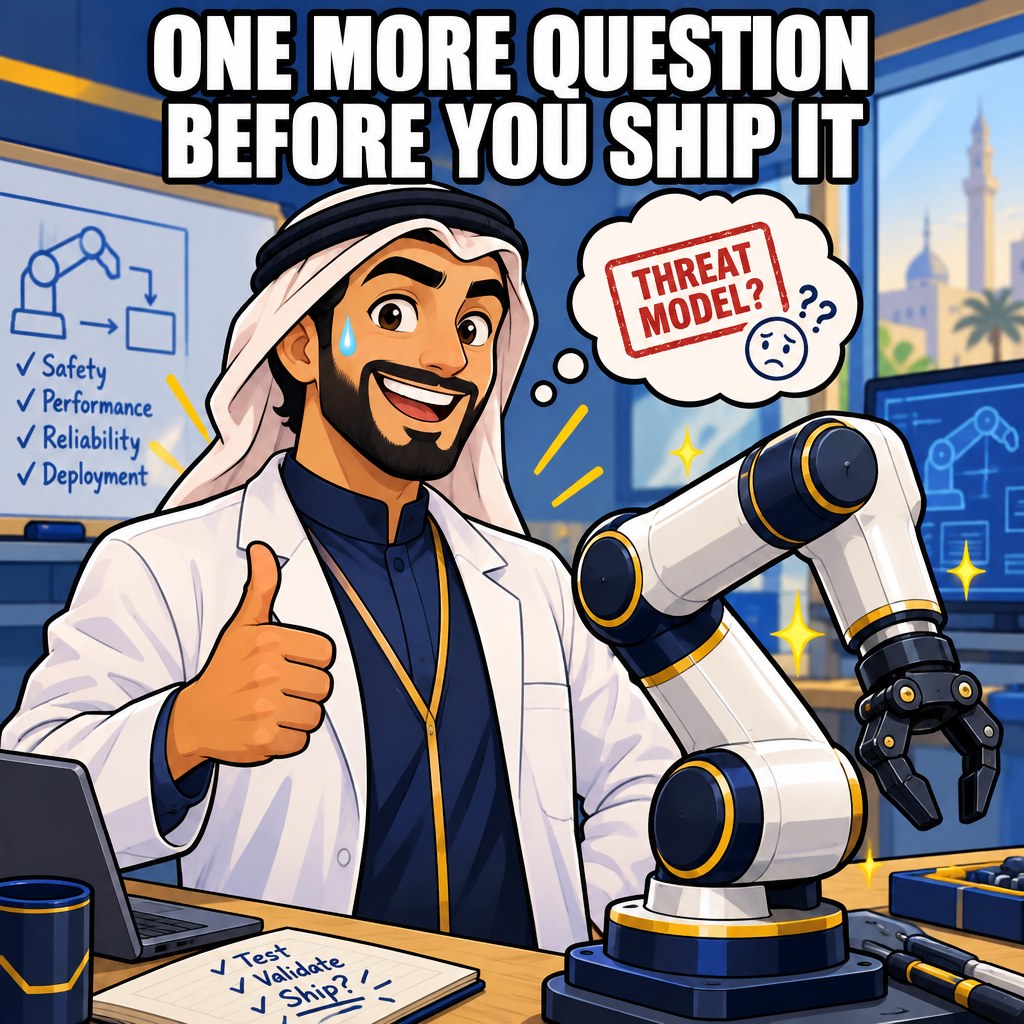
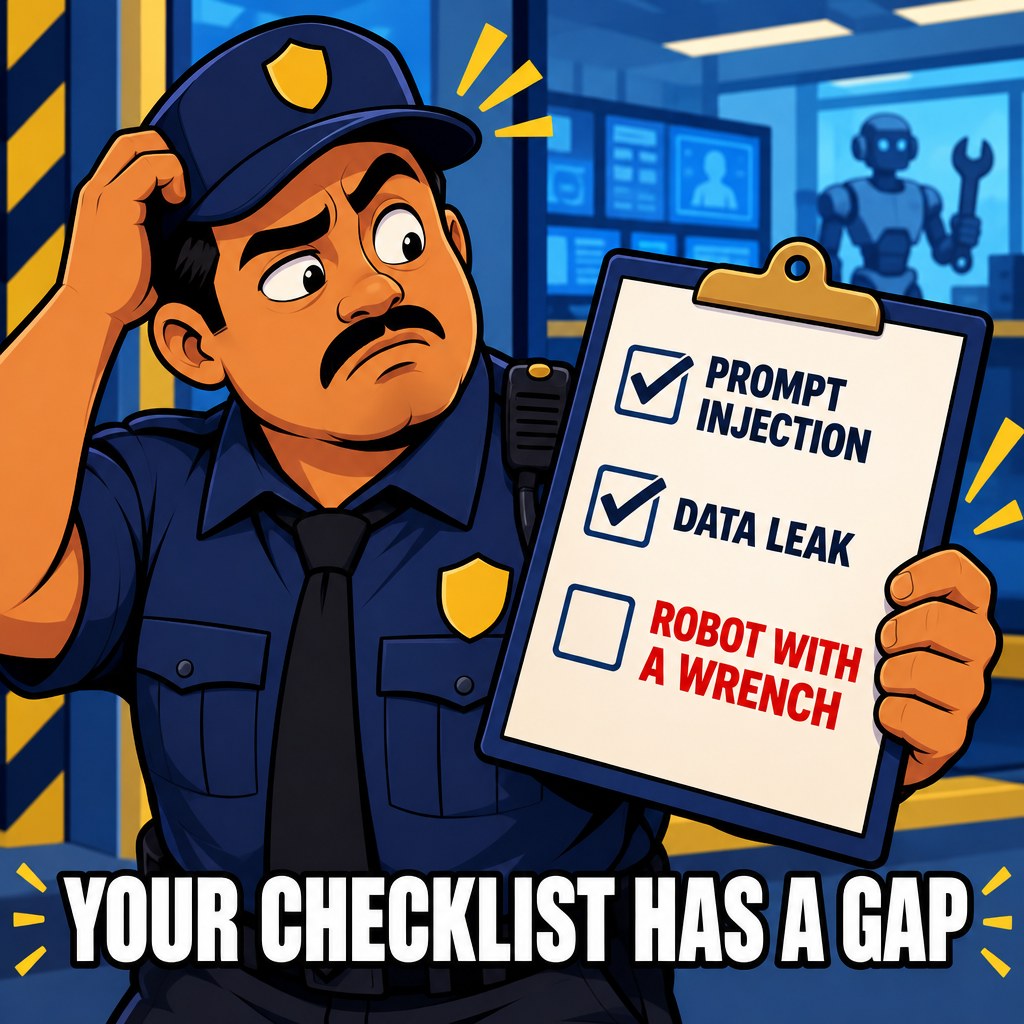
If you're an employer: don't assume your existing AI-agent security review process covers a robot. The threat surface SAFE-BOLT is built against (physical dexterity, sensory ambiguity) and the threat surface MIT's roundtable is built against (prompt injection, non-human identity, model modification) are both real and currently owned by different teams — check whether anyone at your organization owns the overlap.
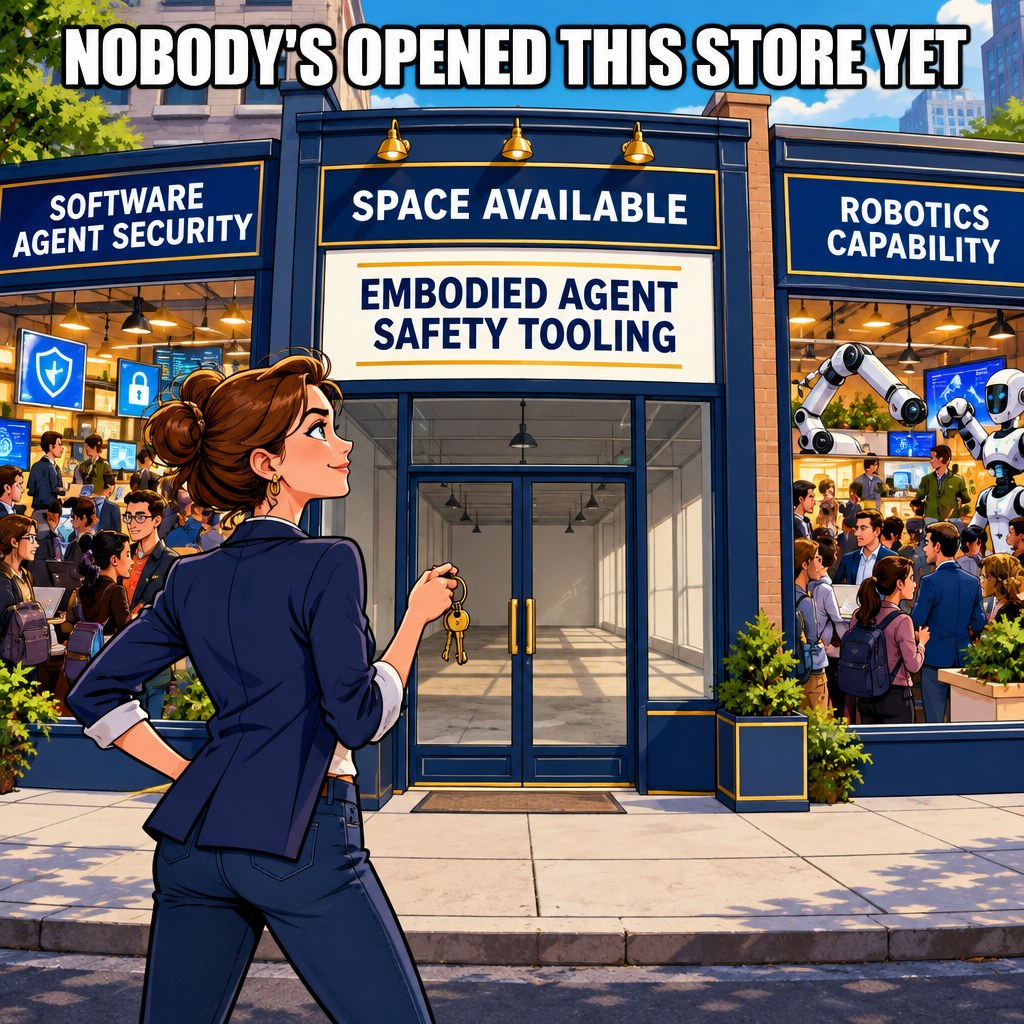
If you're a founder: the gap between these two branches is a real, unclaimed market — agent verification and safety tooling built specifically for embodied/physical agents, not adapted from software-agent security tooling, doesn't appear to exist yet in any product either of these sources names.
Related Research
Where This Stands
Answered
Our Best Guess So Far
Our best guess: agent capability research (like ASPIRE's skill-discovery gains) and agent risk research (like MIT's supply-chain cybersecurity roundtable) are advancing on separate tracks in 2026, with no public evidence yet that either community has built verification or cybersecurity tooling specific to physical/embodied agents rather than adapted from software-agent security practice — a real, currently unclaimed gap between the two.
What Got Us Asking This
- linkMIT CTL Supply Chain Cybersecurity Roundtable, Sept. 22-23, 2026 (today) — Invitation-only; introduces a new Supply Chain Cybersecurity Lab; discusses agent privilege/autonomy trade-offs, prompt injection, model modification, and non-human identity risk.
- linkUT Austin wins DOE Genesis Mission award for SAFE-BOLT force-aware lab robotics — PI Volkan Isler; one of 5 UT Austin awards out of 5,000+ national applicants to the $293M DOE Genesis Mission; builds force-aware bimanual robots for real lab dexterity tasks.
- linkASPIRE: Agentic Skill Discovery for Robotics (UT Austin RPL + NVIDIA GEAR) — +77% on LIBERO-Pro perturbed manipulation, +72% on Robosuite bimanual handover, +32% on BEHAVIOR-1K long-horizon tasks — self-reported benchmark results.
How This Connects
The Physical Side
UT Austin's force-aware bimanual lab robot (SAFE-BOLT), built with the Materials Discovery Research Institute and Medra AI — real physical dexterity and sensory-perception engineering, not simulation-only.
The Money Side
UT Austin's SAFE-BOLT award is one of 5 UT Austin projects funded out of the $293M DOE Genesis Mission (5,000+ national applicants); MIT CTL's roundtable and new Supply Chain Cybersecurity Lab are internally funded center initiatives, not a new external grant.
The Day-to-Day Work
MIT's roundtable brings senior supply-chain, cybersecurity, and risk leaders into a room to debate agent-privilege trade-offs; UT Austin's ASPIRE work is a research-lab-to-benchmark pipeline (UT Austin RPL + NVIDIA GEAR), not an enterprise deployment yet.
The Data/Systems Side
ASPIRE's expanding skill library (code-as-policy, evolutionary search) is the information layer letting a robot compound experience across tasks and embodiments — with no described cybersecurity verification layer on top of it in the published work.
Who We'd Like to Talk To
- Robotics/controls engineers considering a security specialization
- Enterprise AI-security teams whose threat model doesn't yet cover embodied agents
- PIs building agentic-robotics capability work
- Founders building agent-verification tooling
What We Still Need
- Any public reporting connecting MIT's agent-cybersecurity work specifically to physical/embodied agents rather than enterprise software agents
- Independent (non-self-reported) evaluation of ASPIRE's benchmark claims
- What cybersecurity or adversarial-robustness testing, if any, is planned for SAFE-BOLT's robot once built
- A transcript or public readout from the invitation-only MIT roundtable, which this piece could not access directly
What We'll Build From This
- An Agent Operations Lab concept: a small agent demo with permissions, evals, execution traces, latency/cost tracking, and one deliberately injected failure mode
- A tracked comparison of agent-verification tooling built specifically for embodied/physical agents vs. adapted from software-agent security practice
What We Found
Two real, independently sourced 2026 developments sit on opposite sides of the same unresolved problem. MIT's Center for Transportation and Logistics is holding an invitation-only roundtable today and tomorrow (Sept. 22-23) specifically to debate AI-agent privilege, autonomy, and cybersecurity risk in physical supply chains, launching a new Supply Chain Cybersecurity Lab because its own leadership judged the browser-and-code threat model insufficient for what's coming. Meanwhile UT Austin's Robot Perception and Learning Lab, working with NVIDIA's GEAR team, published ASPIRE — an agentic skill-discovery system reporting up to 77% improvement in manipulation under perturbation — and separately won a DOE Genesis Mission award (SAFE-BOLT) to build force-aware robots for real lab dexterity work. Neither institution's public materials show the other's problem being solved: MIT's cybersecurity framing doesn't yet address embodied/physical agents specifically, and UT Austin's robotics work doesn't describe a cybersecurity verification layer. The frontier genuinely is moving from software into physical operations; the tooling to verify it safely is visibly still catching up.
Sources
- linkMIT CTL — Roundtable: Supply Chains Under (Cyber)Attack
- linkUT Austin Computer Science — UT Computer Science Wins DOE Genesis Mission Award to Bring Autonomous Robotics to Scientific Research
- linkUT News — Department of Energy's New AI-for-Science 'Genesis Mission' Awards Funding to 5 UT Research Projects
- linkASPIRE: Agentic Skill Discovery for Robotics (arXiv 2607.00272)
- linkMimicDroid: In-Context Learning for Humanoid Robot Manipulation from Human Play Videos (arXiv 2509.09769)
- linkUT Austin Robot Perception and Learning Lab