GitHub Just Made Agent Orchestration a Normal Part of Shipping Code. Almost No CS Program Teaches It Yet.
If employers increasingly hire engineers to orchestrate, evaluate and secure AI agents, which university curricula are already teaching the workflow skills that map to the emerging job — and which are still teaching around it?
Short Answer
Partly, and only at a small, named set of programs. GitHub's own product — the thing employers actually use to ship code — now has a governance layer built explicitly around orchestrating, evaluating, and securing AI agents: assigning agents to issues, comparing outputs across providers, and an enterprise "control plane" for which agents and models are allowed to touch a repo. That is a real, current, named job description hiding inside a product feature list. On the teaching side, exactly two Stanford courses (CS224V, CS329Z) and one HBCU degree track (N.C. A&T's B.S. in Artificial Intelligence) explicitly name agentic-AI primitives — tool use, agent loops, evaluation, orchestration — in their own public course descriptions. What we don't have, and won't pretend to have, is a reliable count of how many other CS programs are teaching this same material under a different name, or a solid labor-market dataset proving how many jobs actually require it today. That second gap is real enough that we're treating "which curricula are still teaching around it" as an open question, not a finding — see Methodology.
Why the Question Changed Shape in 2026
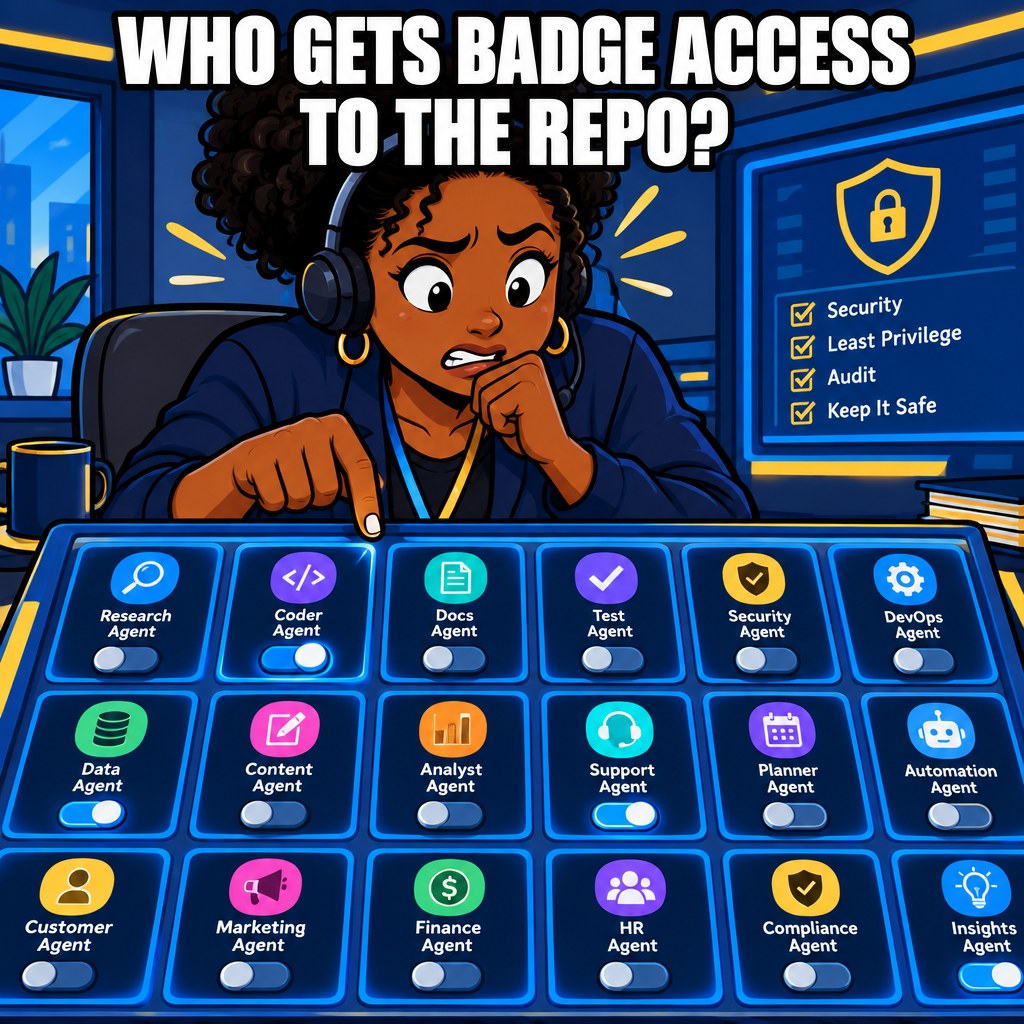
A year ago, "agentic AI" in a syllabus would have meant a research seminar. That's no longer true because the employer side moved first. GitHub introduced Agent HQ at GitHub Universe on October 28, 2025 — a genuine product shift, not a demo — giving developers a "fleet of specialized agents" from multiple providers (Anthropic, OpenAI, Google, Cognition, xAI) that can be assigned to issues, compared against each other, and merged through normal pull-request review. By February 2026, GitHub had pushed agentic workflows directly into GitHub Actions, in public preview, letting teams automate issue triage, PR review, and CI-failure analysis with agents running natively in their existing repo. None of that is optional or experimental anymore inside a GitHub-based engineering org — and it comes bundled with an enterprise "control plane" for security policies, audit logging, and deciding which agents and models are even allowed to run. Orchestrate, evaluate, and secure is no longer an abstract phrase from a job posting; it's literally what the admin panel is for.
How This Connects
open_with Drag nodes to rearrange, tap one for the evidence behind it — pinch or scroll to zoom.
The Skills Map Against the Syllabus — Where It Actually Lines Up
Line up GitHub's own description of what Agent HQ requires from a developer against what CS329Z's public syllabus says it teaches, and the overlap is almost exact. GitHub wants someone who can assign the right agent to the right task, compare outputs across providers, review agent-authored pull requests, and set policy on which agents are even allowed to run. CS329Z's syllabus: tool use, agent loops, compound AI systems, evaluation, and "design tradeoffs" — the class literally has students build the components, not just call an API. That's not a coincidence; it's the same skill under two names. CS224V is adjacent but not identical — RAG, hybrid knowledge reasoning, and scientific knowledge curation are closer to "building a smart research assistant" than "governing a fleet of coding agents in production." N.C. A&T's B.S. in Artificial Intelligence names "Agentic AI" directly as a topic inside a full undergraduate degree, not a single seminar — a meaningfully different bet: breadth across four years versus depth in one quarter.
Missouri S&T is the interesting outlier. Its Kummer Center runs "Team Innovation Projects" — real, industry-sponsored problems assigned to student teams, not a course unit on agent architecture. If the workflow-orchestration skill set can also be picked up by doing rather than being taught, that's a second legitimate path this piece can point to — and it's worth naming as a real alternative, not dismissing because it doesn't show up in a syllabus.

The Numbers So Far
Where This Is Happening

Ground Truth: The Control Plane Is a Real Screen, Not a Concept
Every claim in the "why now" section above is checkable against a real product, not a press quote. GitHub's own blog post on Agent HQ describes an actual admin screen where an enterprise sets "security policies, audit logging, and manage access all in one place" and decides "which agents are allowed" and "access to models" — that's the literal, current, shipping version of "secure AI agents" from the dossier's own framing of this question. It's not a hypothetical future job description. Someone, right now, at any company running GitHub Enterprise with Agent HQ turned on, is the person who configures that screen.
Methodology
This piece draws on GitHub's own blog and changelog posts for Agent HQ and Agentic Workflows, Stanford's own public course pages for CS224V and CS329Z, N.C. A&T's own undergraduate program page, and Missouri S&T's own Kummer Center research-programs page (see the companion pieces on AI entering university labs and the $100M compute map for the underlying university-funding citations reused here). What's explicitly missing, and what keeps this piece's back half honestly hedged rather than confident: we do not have a dataset of CS program syllabi broad enough to say which schools are "still teaching around" this material — that would require pulling and coding hundreds of course catalogs, which this pass didn't do. We also don't have a verified, primary-source job-posting dataset (BLS or a specific job board's own data export) confirming the labor-market size of "agent orchestration" roles; the numbers circulating in secondhand coverage weren't independently confirmed against primary data this pass, so we're leaving them out rather than repeating an unverified figure. That's a real gap for a future research pass to close, not a finding we're willing to round up to.

Moral of the Story
If you're a student: read CS329Z's public syllabus even if you don't go to Stanford — it's public, and the skill it's grading (build a tool-using agent, evaluate it, understand the cost/design tradeoffs) is the same skill GitHub's control plane assumes someone on the other end of it already has. Pair that with a real repo running Agent HQ or GitHub Actions' agentic workflows and you have a portfolio project that maps directly to a real admin screen, not a toy demo.
If you're a professor or curriculum designer: audit your own syllabus against GitHub's actual product surface, not against last year's assumption of what "AI in software engineering" means — assigning work to an agent, comparing agent output, and setting governance policy are now three separate, nameable skills, and a course that only covers "prompting" is teaching last year's version of this job.
If you're hiring: don't assume a "used Copilot in class" line on a resume means someone can run GitHub's actual control plane. Ask directly whether they've configured agent permissions, compared multiple agents on the same task, or reviewed an agent-authored PR — three concrete, checkable things, not a vibe.
If you're a founder or program builder: Missouri S&T's Team Innovation Projects model is worth copying even if you're not a university — sponsoring a real, bounded problem for a student team to solve with agent tooling is a faster, cheaper way to find this skill set than waiting for a curriculum committee to catch up.
Related Research
Where This Stands
Answered
Our Best Guess So Far
Our best guess: the specific, nameable skills GitHub's Agent HQ now requires (assigning/comparing agents, reviewing agent-authored PRs, setting agent/model governance policy) are currently taught explicitly at only a small, named set of programs — but we don't have the syllabus dataset needed to say confidently which other programs are or aren't covering the same material under a different name, so the 'who's teaching around it' half of this question stays genuinely open.
What Got Us Asking This
- linkGitHub Agent HQ — launched Oct 28, 2025 — A real admin control plane for assigning, comparing, and governing multi-provider coding agents inside a repo.
- linkGitHub Agentic Workflows in GitHub Actions — public preview, Feb 2026 — Agents now run natively in CI/CD for issue triage, PR review, and failure analysis.
- linkStanford CS329Z — Engineering AI Agents — Tool use, agent loops, compound AI systems, DSPy, evaluation — students build agent components from scratch.
- linkN.C. A&T B.S. Artificial Intelligence — Names 'Agentic AI' directly as a core undergraduate degree topic.
How This Connects
The Physical Side
No physical infrastructure claim here — this is a software-platform and curriculum question, not a lab-buildout one.
The Money Side
No new funding event drives this piece; the 'why now' is a product launch (GitHub Agent HQ, Oct 2025) and its Feb 2026 expansion into GitHub Actions, not a grant.
The Day-to-Day Work
The real job GitHub's own control plane implies: someone who assigns agents to tasks, compares their output, reviews agent-authored pull requests, and sets policy on which agents/models are allowed to run in a company's repos.
The Data/Systems Side
Two Stanford courses and one HBCU degree track name these exact primitives on their own public pages; Missouri S&T offers a different, project-based path to the same skills through industry-sponsored Team Innovation Projects.
Who We'd Like to Talk To
- CS students choosing electives or a specialization
- Curriculum designers and department chairs
- Engineering hiring managers writing job descriptions
- Program/workshop builders (bootcamps, corporate training)
What We Still Need
- A broad, coded dataset of CS program syllabi to determine how many teach agent-orchestration primitives under a different course name
- A primary-source (BLS or specific job-board) dataset on agent-orchestration job-posting volume and salary — not a secondhand blog summary
- Placement data for CS224V/CS329Z graduates specifically into agent-orchestration-shaped roles
- Confirmation of how many other universities' project-based programs (like Missouri S&T's) function as an alternate path to these skills
What We'll Build From This
- A syllabus-to-primitive coding tool that scores any CS program's public course catalog against GitHub Agent HQ's real feature set
- A tracked roster of universities that add explicit agent-orchestration/governance coursework over the next several terms
What We Found
GitHub's own Agent HQ (launched Oct. 28, 2025) and its Feb. 2026 expansion into GitHub Actions turned 'orchestrate, evaluate and secure AI agents' into a real, shipping admin control plane — not a hypothetical job description. On the teaching side, only a small, named set of programs (Stanford's CS224V and CS329Z, N.C. A&T's B.S. in Artificial Intelligence) explicitly name these primitives on their own public pages, and Missouri S&T offers a project-based alternate path through industry-sponsored work. We do not have the broad syllabus or job-posting data needed to say confidently which other programs are or aren't covering this material — that half of the question stays open rather than answered.
Sources
- linkGitHub — Introducing Agent HQ: Any agent, any way you work
- linkGitHub Changelog — Agentic Workflows now in technical preview
- linkStanford CS329Z — Engineering AI Agents, Fall 2026
- linkStanford CS224V — Agentic AI, Fall 2026
- linkN.C. A&T — B.S. Artificial Intelligence, Engineering & Computing Track
- linkMissouri S&T — Kummer Research Ignition Grant Initiative