Purdue's $100 Million AI Workforce Program Answers to the Navy. Nobody Else's Does.
As universities move from standalone AI courses to industry-governed pipelines, compute infrastructure, internships, and federally funded consortia, who is actually shaping the technical workforce: faculty, federal agencies, or the companies sitting on advisory boards?
Short Answer
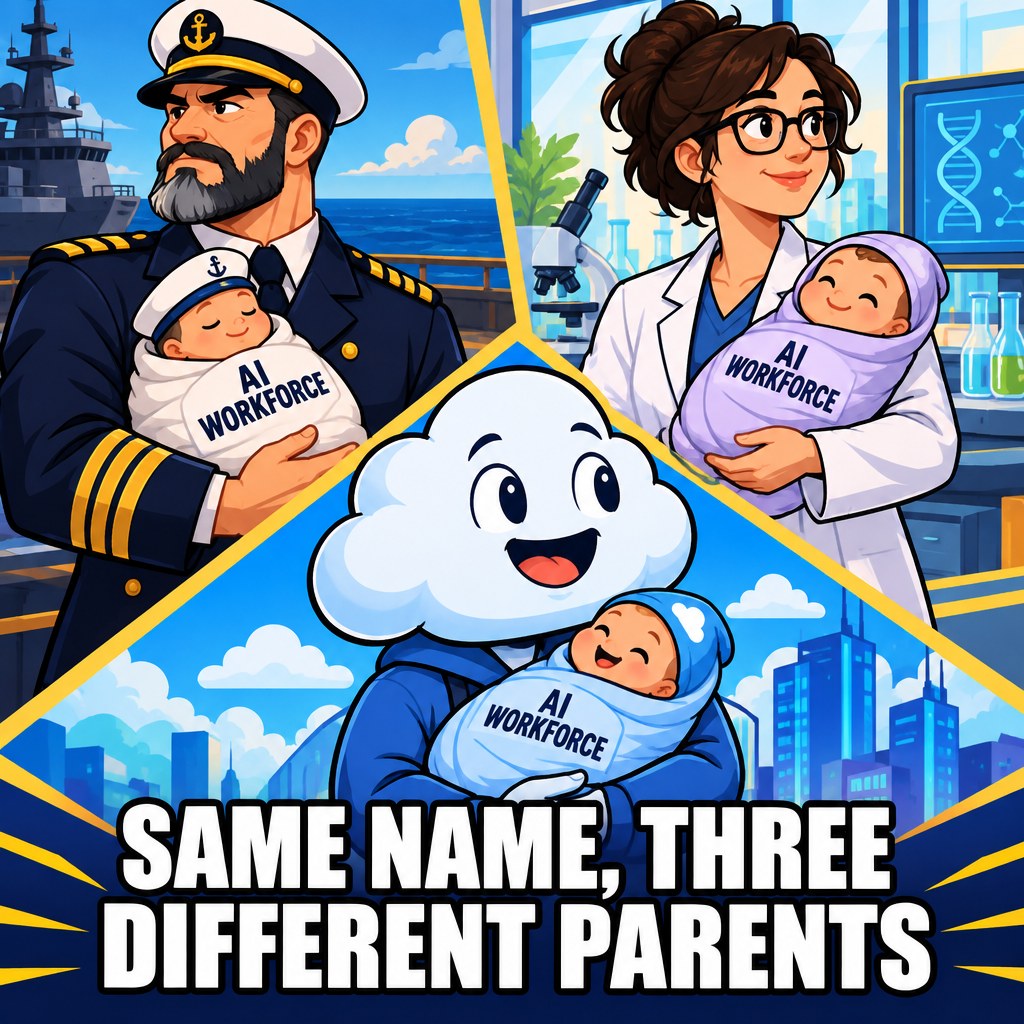
Nobody does — and that's the actual finding, not a dodge. Three real programs are each building a piece of what gets called "the AI workforce pipeline" right now, and each one answers to a different boss. Purdue's SCALE program, now carrying more than $100 million in Department of War funding across 35 universities, is administered by the Navy's own microelectronics office and exists to feed defense contractors. The NSF's new $35 million National AI Research Resource Operations Center, co-led by UT Austin's TACC, exists to make AI compute and data open to any researcher, with no defense strings attached. Howard University's AI Network runs on Amazon's cloud and Amazon's curriculum, expanding AI readiness to other HBCUs on a private company's terms. All three call themselves workforce infrastructure. None of them report to the same authority, use the same curriculum-governance process, or train students for the same jobs. The place where "who's actually in charge" gets answered most concretely is a September 18 memorandum between Purdue and Illinois that puts a literal industry advisory board in the room — which is real, sourced, and probably the most honest single data point in this whole question.
Why a Navy Office Runs the Country's Biggest University AI-Workforce Program
SCALE — Scalable Asymmetric Lifecycle Engagement — didn't start as an AI story. It started in 2020 as a $19.2 million Department of Defense response to a narrower problem: too few U.S. citizens with the security clearances and microelectronics training to work in the defense chip supply chain. The program is led by Purdue but managed day to day by the Naval Surface Warfare Center, Crane Division, under the Pentagon's Trusted and Assured Microelectronics effort. That federal-office detail matters more than it sounds: it means the country's largest university-based technical-workforce program isn't run out of an education agency or a university system at all. It's run out of a Navy weapons division.
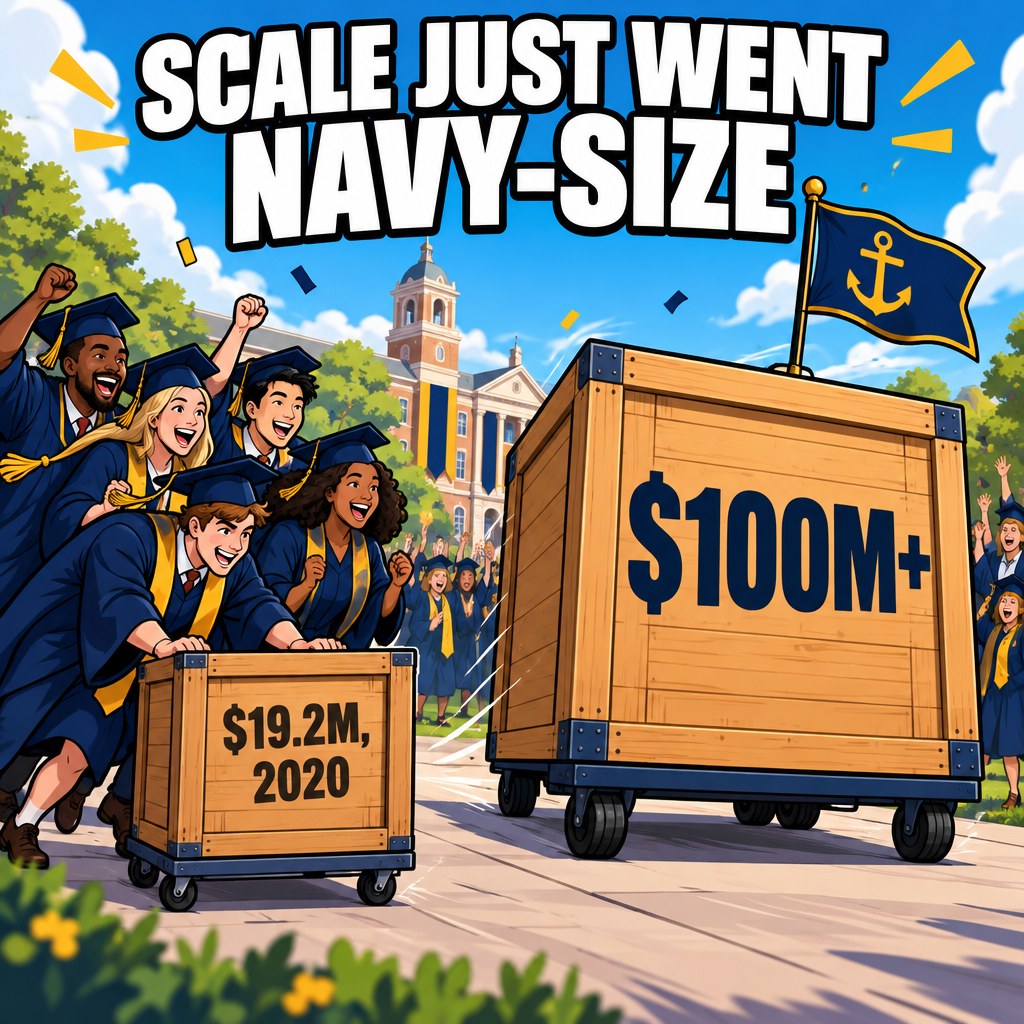
Six years later, SCALE is Purdue's single largest federally funded research effort of any kind, at any dollar amount, in any field — more than $100 million through fiscal year 2027, spread across 35 partner universities and more than 75 government and industry partners. That's not a rounding-error side program. It's the largest thing happening at one of the country's biggest engineering schools, and it exists because a defense agency decided the commercial chip industry alone wasn't going to produce cleared, trained workers fast enough on its own.
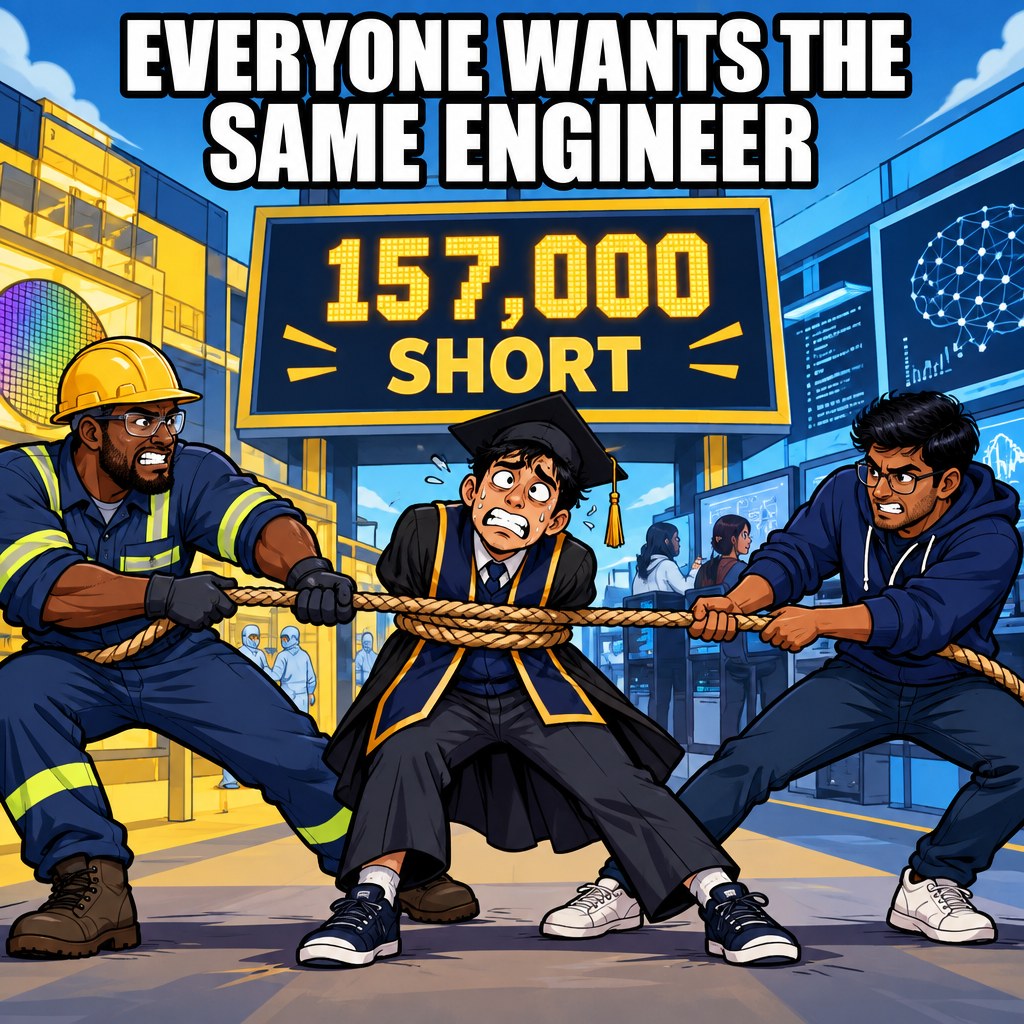
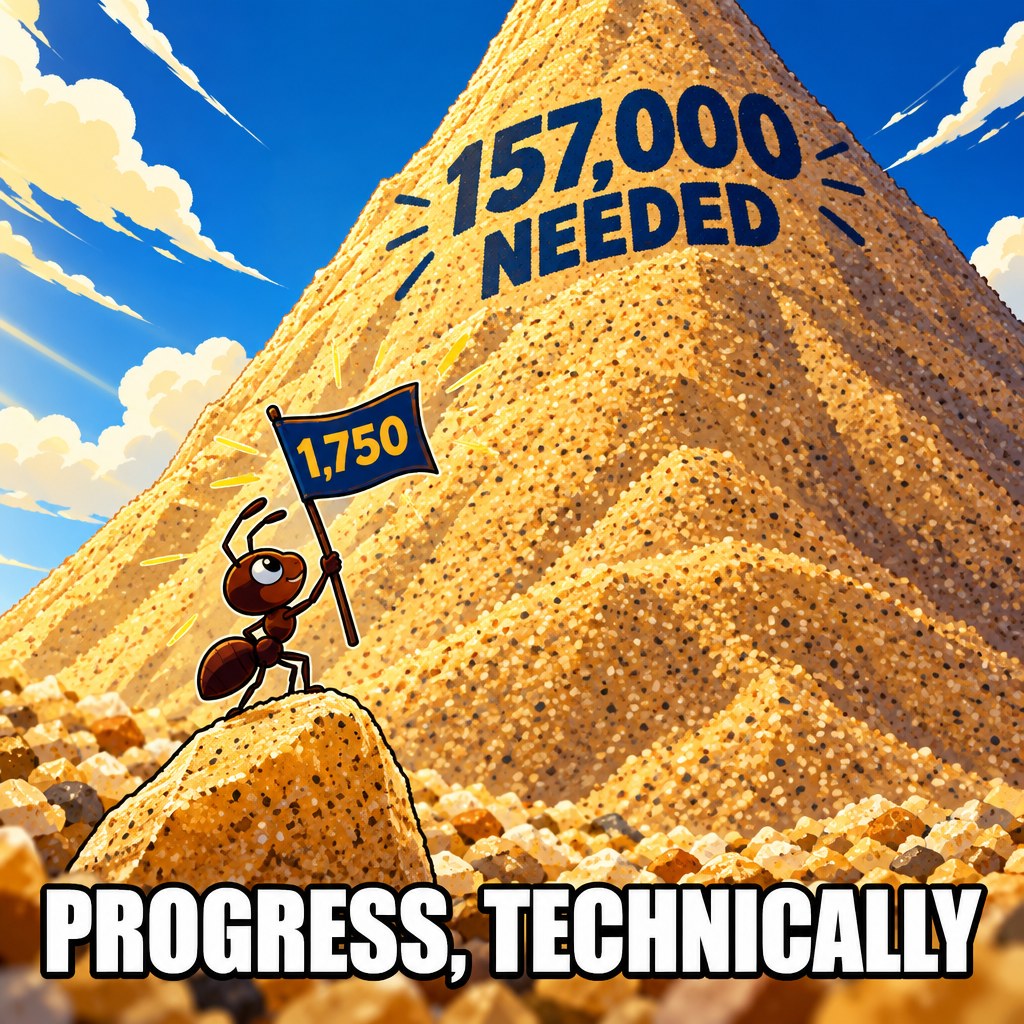
The reason this belongs in an "AI workforce" story at all, rather than staying a chips-and-defense story, is that the same skills shortage now sits underneath both. A joint SEMI Foundation, NSF, and McKinsey analysis released in mid-2026 put the projected U.S. semiconductor workforce gap at 127,000 to 157,000 workers by 2030 — with roughly three-quarters of that demand in manufacturing-adjacent roles, and 73% of surveyed chip employers already reporting real trouble filling engineering seats. AI data-center buildout and chip fabs are now openly competing for the same small pool of trained engineers. SCALE was built for the defense slice of that shortage specifically — not the general "AI workforce" the dossier language implies.
How This Connects
open_with Drag nodes to rearrange, tap one for the evidence behind it — pinch or scroll to zoom.
The Part Almost Nobody Says Out Loud: SCALE Isn't an "AI Workforce" Program
Say "AI workforce pipeline" to most people in September 2026 and they picture agentic coding tools, GitHub Agent HQ, prompt engineering. SCALE trains almost none of that. Its own outcome data is specific: 339 of its alumni are placed in defense microelectronics jobs, 161 more went into graduate study in microelectronics-relevant fields, and 64% of all SCALE alumni end up working in defense or for a defense contractor — nine of the program's ten most common employers are defense-sector. This is a chip-design-and-fabrication pipeline with a security-clearance requirement baked in, not a software-agent pipeline. Calling it "AI workforce" isn't wrong exactly — semiconductors are the physical substrate everything else runs on — but it quietly elides the difference between "trained to build the chips AI runs on" and "trained to build the AI itself," and those are different degrees, different employers, and increasingly different labor pools competing for the same undergraduates.
That distinction is why the Purdue-Illinois MOU, signed September 18 by deans Mark Lundstrom and Rashid Bashir, is the most concrete governance artifact in this whole question. It doesn't just add course-sharing or a joint career fair — Purdue's own announcement states the partnership is "governed in part by a shared industry advisory board," covering fabs, equipment and materials, chip design, verification and testing, and advanced packaging. That's an employer body sitting inside the actual governance structure of two universities' curricula, not adjacent to it. SCALE's own program description describes the mechanism this likely follows: industry and government partners meet through working groups and technical symposiums to identify and prioritize the skills new hires need, and SCALE's partner universities then update coursework to match. Two deans signed the MOU. An industry board will help run what happens next.

Meanwhile the NAIRR Operations Center answers to a structurally different mandate. NSF's $35 million, five-year cooperative award — co-led by UT Austin's TACC alongside UC San Diego's SDSC — exists to coordinate private-sector, federal, and academic AI compute and data resources into one national access portal, with no defense-clearance gate and no named industry advisory board in its own announcement. Its pilot phase already supported more than 800 research projects and thousands of students since 2024. It is, deliberately, the opposite governance model from SCALE: open access instead of vetted pipeline. And Howard's AI Network runs on a third model entirely — a private company, Amazon, choosing which five universities nationwide get to be regional leads, funding the bootcamps and curriculum on its own commercial terms, with no federal agency or industry board in the loop at all.
The Numbers So Far
The second chart is the one that actually answers "who owns this." Nobody does, at the scale the shortfall requires — SCALE is real, well-funded relative to any single university program, and still two orders of magnitude smaller than the 2030 gap it's positioned against. That math is exactly why three separately governed pipelines (DoD, NSF, AWS) are running in parallel instead of one consolidated program: no single owner has the mandate or the budget to close this alone, so each is closing a different slice under a different authority.
Where This Is Happening
Ground Truth: What the MOU Actually Committed To, in Writing
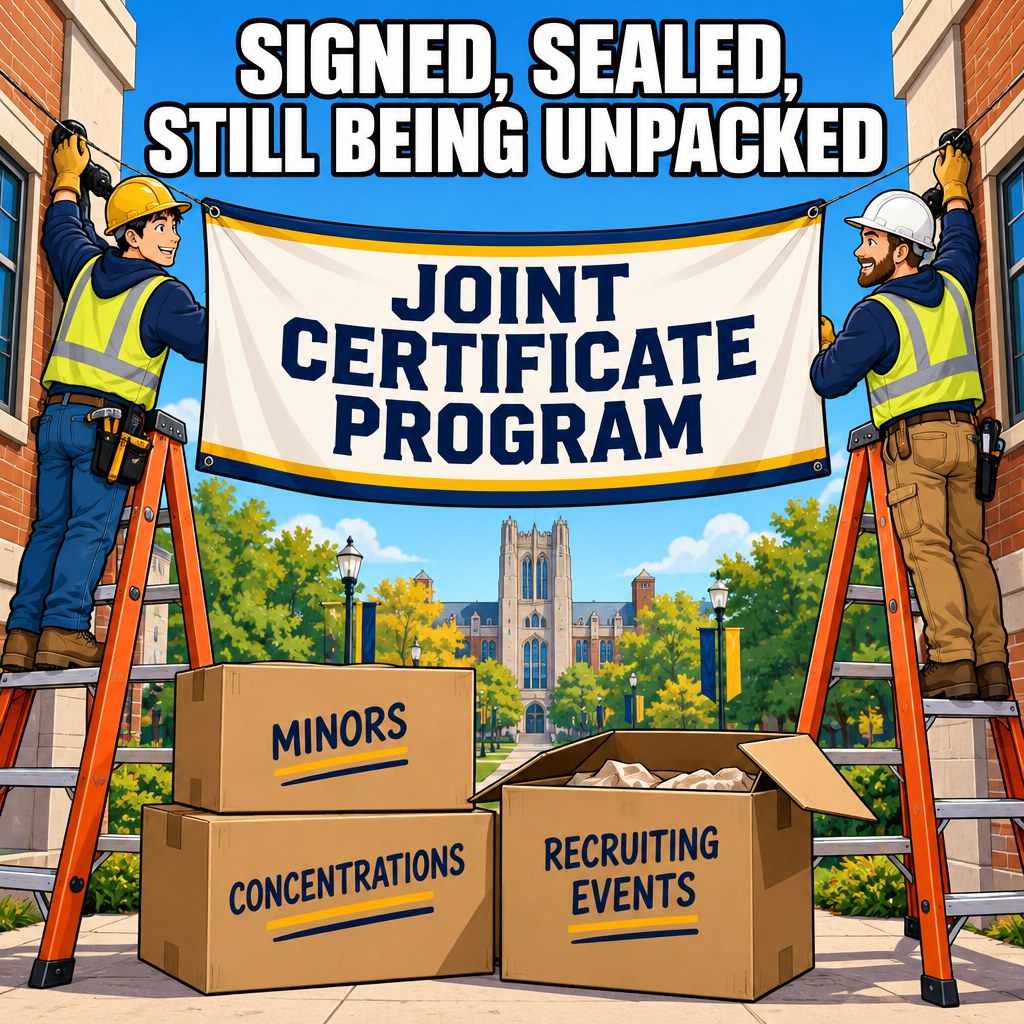
Most of what makes this question hard to answer is that "workforce pipeline" governance usually happens in meetings nobody publishes minutes from. The September 18 MOU is a rare exception: it's a dated, named, on-the-record commitment. Purdue's own announcement lists the concrete deliverables — joint industry-focused certificates, minors, and concentrations; expanded graduate programs; jointly held recruiting and research events across Indiana and Illinois; and a leadership structure with Shaloo Rakheja (Illinois) and David Janes (Purdue) as co-directors, with a third executive-director role still open as of the announcement. That's a specific, checkable structure, not a vague "partnership" press release — and it's the clearest place in this entire question where you can point to a real document and say "this is who's in the room."
Methodology
This piece draws on Purdue's own newsroom and College of Engineering announcements for the SCALE funding increase and the Purdue-Illinois MOU, Manufacturing Dive's reporting on the federal contract mechanics (confirming Naval Surface Warfare Center, Crane Division as the administering office), SCALE's own program description for its industry-feedback curriculum model, NSF's and FedScoop's reporting on the NAIRR Operations Center award, Howard University's own announcement of its AWS regional-lead designation, and the SEMI Foundation/NSF/McKinsey joint workforce-landscape report for national shortfall figures. What's missing: no public roster of the Purdue-Illinois shared industry advisory board's actual member companies; no confirmation of whether Illinois students gain any access to SCALE's federal funding pool specifically or only shared curriculum and events; and no placement or outcome data yet for either the NAIRR Operations Center or the Howard AI Network, both too new to have reported results.
Moral of the Story
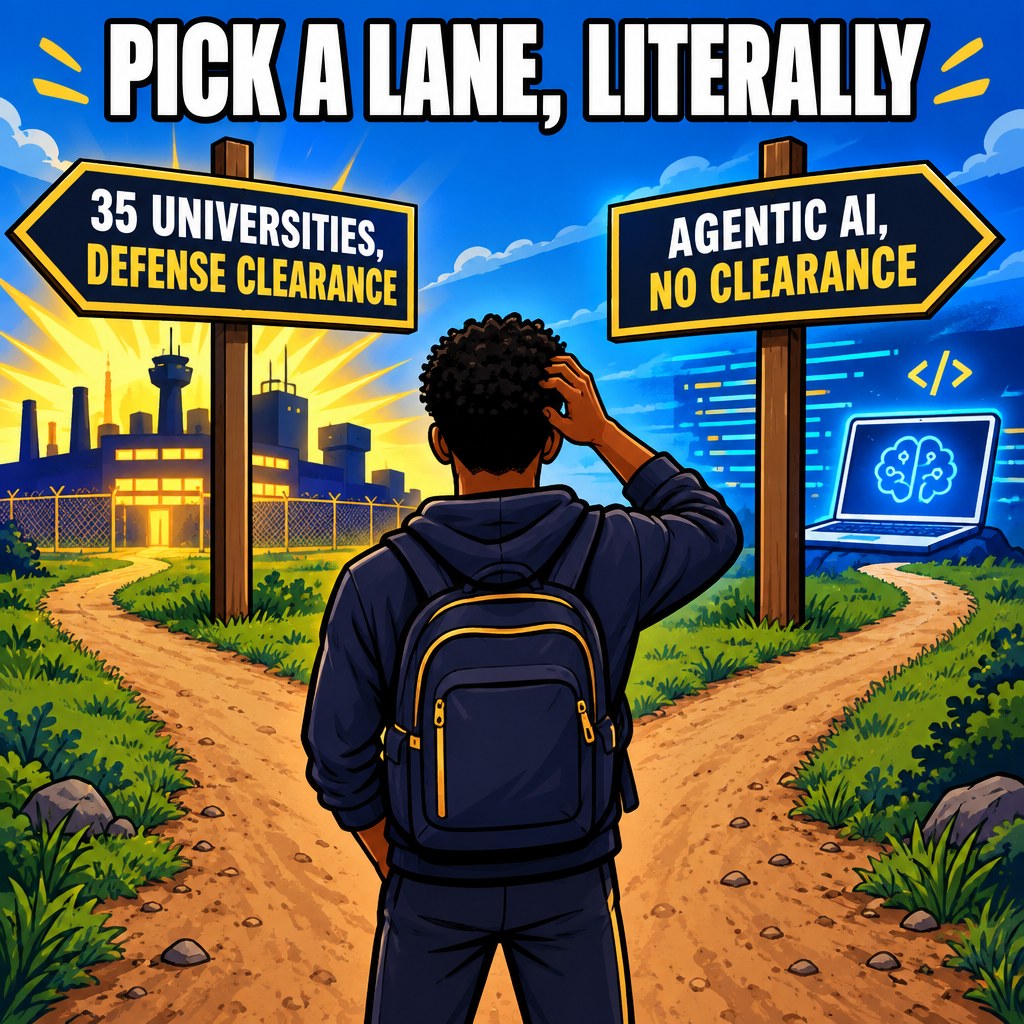
If you're a student: these are not the same major wearing different clothes. If you want a defense-cleared microelectronics career, SCALE's 35-university consortium is a real, funded, outcome-tracked path — go look at whether your school is one of the 35. If you want to build agentic AI software, none of the three pipelines in this piece is actually training for that; look at what your CS department teaches directly instead.
If you're a professor or department chair: the Purdue-Illinois MOU is a usable template, not a one-off. If your program is trying to build closer employer ties, "a named shared industry advisory board with specific deliverables and co-directors" is a more concrete ask of your own dean than "more industry engagement."
If you're an employer: SCALE already has a seat-at-the-table mechanism built and running — 75+ partners are already inside it. The Purdue-Illinois advisory board is a second, newer door into the same kind of access. Neither requires you to build your own university relationship from scratch.
If you're a policymaker: the scale mismatch in the second chart above is the real policy problem — SCALE's total six-year output is under 1% of the low-end 2030 shortfall estimate. A single well-funded program, however well it works, isn't structurally capable of closing this gap by itself; the actual question worth asking is whether DoD, NSF, and private cloud vendors coordinating three separate pipelines is a feature or a gap in itself.
Related Research
Where This Stands
Answered
Our Best Guess So Far
Our best guess: no single entity currently owns "the AI workforce pipeline" because at least three separately governed programs (SCALE under DoD/NSWC Crane, the NAIRR Operations Center under NSF, the Howard AI Network under AWS) are each building a different, non-overlapping slice of it under a different authority — and the Purdue-Illinois shared industry advisory board is the clearest evidence yet of employers gaining a formal governance seat inside at least one of those slices.
What Got Us Asking This
- linkPurdue SCALE surpasses $100M, becomes Purdue's largest federally funded effort — 35 partner universities, 75+ government/industry partners, 1,175 current students, 339 alumni placed in defense microelectronics jobs, 64% of alumni in defense/defense contracting.
- linkNaval Surface Warfare Center, Crane Division administers the SCALE contract — Confirms the federal office managing SCALE's day-to-day funding is a Navy weapons division, not an education agency.
- linkPurdue-Illinois semiconductor workforce MOU, signed Sept. 18, 2026 — Purdue's own announcement: the partnership is "governed in part by a shared industry advisory board" covering fabs, chip design, verification/testing, and advanced packaging.
- linkNSF's $35M NAIRR Operations Center, co-led by UT Austin's TACC — A 5-year cooperative award building open national AI compute/data access — no defense-clearance gate, no named industry advisory board.
How This Connects
The Physical Side
SCALE's classroom/apprenticeship network across 35 campuses, TACC's compute infrastructure feeding the national NAIRR portal, and Howard's AWS-hosted cloud/bootcamp infrastructure — three physically separate build-outs.
The Money Side
More than $100M in Department of War funding (SCALE, through FY2027), $35M in NSF funding (NAIRR Operations Center, 5-year award), and an undisclosed AWS investment in Howard's regional-lead role.
The Day-to-Day Work
Day-to-day governance sits with a Navy office (NSWC Crane) for SCALE, an NSF cooperative-agreement structure for NAIRR-OC, and Amazon's own program terms for the Howard AI Network — plus a new named industry advisory board inside the Purdue-Illinois MOU specifically.
The Data/Systems Side
SCALE's industry/government partners maintain a living skills list that partner universities update coursework against; NAIRR-OC's information layer is a national compute/data access portal, not a curriculum feed.
Who We'd Like to Talk To
- Professors and department chairs running SCALE-affiliated microelectronics programs
- Employers seeking a seat on a university curriculum advisory board
- Students choosing between a defense-microelectronics track and an agentic-AI software track
- Workforce-policy staff at DoD, NSF, and state economic-development offices
What We Still Need
- A public roster of the Purdue-Illinois shared industry advisory board's actual member companies
- Confirmation of whether Illinois students gain access to SCALE's federal funding pool specifically, or only shared curriculum and events
- Placement or outcome data for the NAIRR Operations Center and the Howard AI Network, both too new to have reported results
- A syllabus-level comparison of what SCALE's industry-identified skills list actually adds to coursework each year
What We'll Build From This
- A tracked roster of AI/semiconductor workforce programs by funding source and governance model — Workforce Capital Graph
- A comparison table of which advisory boards are public, named, and seated vs. informal or undisclosed
What We Found
Three real, currently operating programs each claim a piece of "the AI workforce pipeline" in 2026, and each answers to a different authority: Purdue's SCALE program (>$100M, 35 universities) is funded by the Department of War and administered by the Naval Surface Warfare Center, Crane Division, training almost exclusively for defense-cleared microelectronics jobs (64% of alumni land in defense or defense contracting) — not agentic AI software work, despite the "AI workforce" framing. The NSF's $35M NAIRR Operations Center, co-led by UT Austin's TACC, runs on an open-access mandate with no defense gate and no named industry board. Howard University's AI Network runs on Amazon's own commercial terms as one of five AWS-selected regional leads. The clearest evidence of employers gaining actual governance power is the Sept. 18, 2026 Purdue-Illinois MOU, explicitly "governed in part by a shared industry advisory board" — but even SCALE's full six-year output (1,750 students supported since 2020) is under 1% of the 127,000-157,000-worker national semiconductor shortfall projected for 2030, meaning no single one of these pipelines is close to sized for the problem it's aimed at.
Sources
- linkPurdue — SCALE expands its national impact, becomes Purdue's largest federally funded research effort
- linkManufacturing Dive — Defense Department increases microelectronics workforce program contract to $100M
- linkSCALE — About the program (industry/government-informed curriculum)
- linkPurdue College of Engineering — Purdue and University of Illinois team up to strengthen semiconductor workforce
- linkFedScoop — NSF announces up to $35 million to stand up AI research resource operations center
- linkHPCwire — NAIRR Shifts from Pilot into Operations Mode
- linkThe Dig at Howard University — Howard University Launches Howard AI Network powered by AWS
- linkSEMI — SEMI Foundation and NSF launch first four Regional Nodes of the National Network for Microelectronics Education